The History of Pogoni
Pogoni is one of the most distinctive historical regions of Epirus, with a character shaped by its geographical location near the border and by its long-standing connection to mountain passes, population movements, and daily life in the mountains. The region has long been a key hub connecting Illyria and the northern Balkans, a fact that has influenced both its historical trajectory and its cultural character. The landscape, with its valleys, forests, plateaus, and small settlements, shaped a world that was simple yet deeply rooted in the land and collective memory.
The history of Pogoni is also closely linked to migration. The difficult living conditions and harsh treatment of the region during the Ottoman period led to a large wave of emigration, which deeply marked the psyche and culture of the inhabitants. This experience of absence and exile is vividly reflected in polyphonic singing, which remains to this day one of the most authentic expressions of Pogoni’s identity. Thus, the history of the region is found not only in events and monuments, but also in the way communities have kept their memory alive through song, custom, and collective experience.
The Benefactors of Pogoni
Pogoni is associated with a significant tradition of service, which has shaped the region’s historical and social identity. From its villages emerged individuals who, through their commercial, professional, and social careers, kept alive the bond with their place of origin and reinforced the broader mainland tradition of philanthropy. Among them are Ioannis Gourmas and Vasileios Petrakis from Dipalitsa, Christodoulos Konstantinou and Panagiotis Karetsos from Lavdani, Anastasios D. Ilaridis, Apostolos Zoitsis, Michael Vlachos, Georgios Katsounidis or Katsounis, and Loukas N. Kontis from Vissiani, as well as Spyros P. Peklaridis, Nikolaos Matsikakis, Alexis Moutsios, and Stavros Sechopoulos from Tsaraplana.
These records show that Pogoni was not only a place of memory and tradition, but also a place of people who turned their personal journeys into a legacy for their homeland. At the same time, the region’s contributions were also expressed collectively, through the village brotherhoods and expatriate communities, which have supported their birthplace over time and kept the spirit of the community alive.
Local Products of Pogoni
Pogoni’s culinary identity is rooted in livestock farming, small-scale local production, and the residents’ close connection to the land and the seasons. Official municipal and development documents for the region highlight the importance of high-quality local products, while in villages such as Molyvdoskepasti, organized local production is documented, featuring products like tsipouro, wine, trahanas, and spoon sweets. These products embody the region’s simple yet authentic cuisine and are directly linked to the way of life of its communities.
Beyond the typical traditional goods, Pogoni represents a more authentic, home-style, and unpretentious culinary side of Epirus. The region’s cuisine is based on the principles of self-sufficiency, local ingredients, and simple, pure flavors, as is the case in many mountainous areas of Epirus.
Churches and Monasteries in Pogoni
Pogoni’s religious heritage is particularly rich and constitutes a fundamental element of the region’s identity. Official sources on Pogoni mention significant monasteries and churches, many of which are associated with the Byzantine and post-Byzantine periods and preserve remarkable architectural and artistic elements. Among the most important monuments are the Monastery of Sosinos in Parakalamos, the Monastery of Vellas near Kalpaki, and the Monastery of Avel in Vissani—monuments that lend Pogoni a profound spiritual and historical depth.
At the same time, churches and monasteries of exceptional interest can be found in various villages throughout Pogoni. In Vasiliko, the highlights include the Monastery of Saints Constantine and Helen (1779), the Church of the Presentation of the Savior (also 1779), and the older Church of Saint Athanasius, dating back to around 1300. In Pogoniani, notable churches include Agia Paraskevi, Panagia Karterousa, Agios Athanasios, and the distinctive Agios Nikolaos from 1873, with its elaborate wood-carved iconostasis and unique architecture. All these monuments reinforce the image of a place where religious tradition remains organically intertwined with history and local life.
Museums and Cultural Attractions
Pogoni features cultural sites that help visitors gain a deeper understanding of the region’s character. In Kalpaki, the administrative center of the municipality, there is a Military Museum dedicated to the period 1940–1941, with exhibits related to the Greco-Italian War and the Battle of Kalpaki. The war memorial for the battle is also located in the same area, a feature that gives Pogoni a strong historical and national significance.
Also of particular interest is the Pogoni-Deropolis Folklore Museum in Pogoniani, housed in an old military outpost and featuring objects of daily life, agricultural tools, costumes, photographs, and artifacts of local history, as well as the house-museum of Patriarch Athenagoras in Vasiliko. In addition, villages such as Stratinista, Zavrocho, and Kastani are home to smaller collections of folkloric or natural history interest, which enhance the cultural richness of the region.
Architecture and Cultural Identity
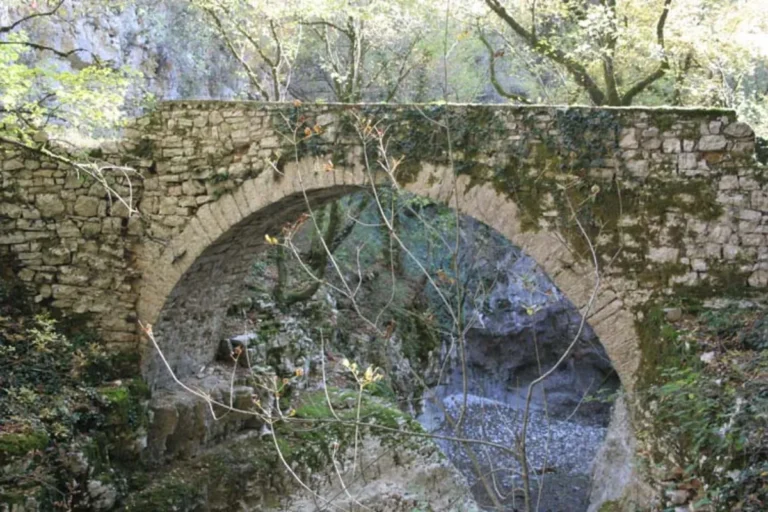
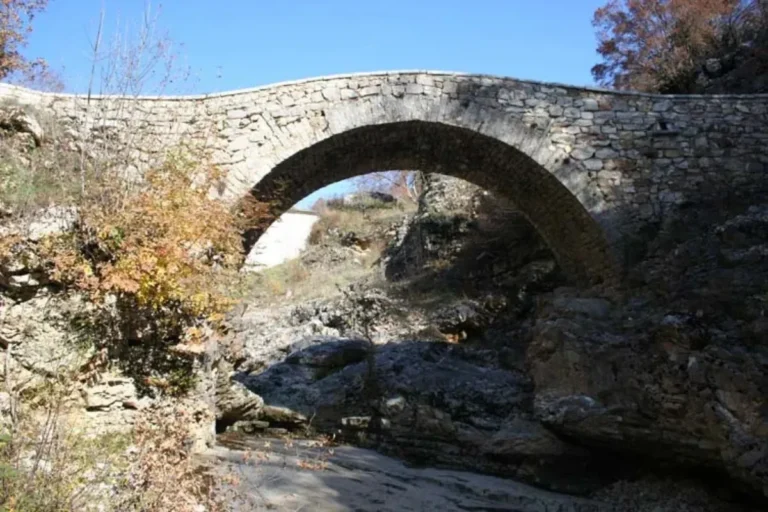
The architecture of Pogoni is characterized by simplicity, authenticity, and a close integration with the natural landscape. Stone houses, churches, bridges, watermills, waterwheels, and traditional structures compose a picture that is not based on grandeur, but on functionality and the quiet endurance of time. In villages such as Paleopyrgos, Oreokastro, Agios Kosmas, and Kalpaki, traditional watermills and stone troughs—which were once an active part of daily life and are now designated as monuments—have been preserved. Also noteworthy is the stone bridge in Gretsi, which completes the characteristic image of Pogoni architecture.
Above all, however, Pogoni’s cultural identity is inextricably linked to polyphonic singing, which serves as one of the region’s most important vehicles for memory and expression. Exile, absence, community, and resilience are conveyed through voices and customs, giving Pogoni a cultural identity that is not only visible in its buildings and monuments but also audible.

Sights of Pogoni
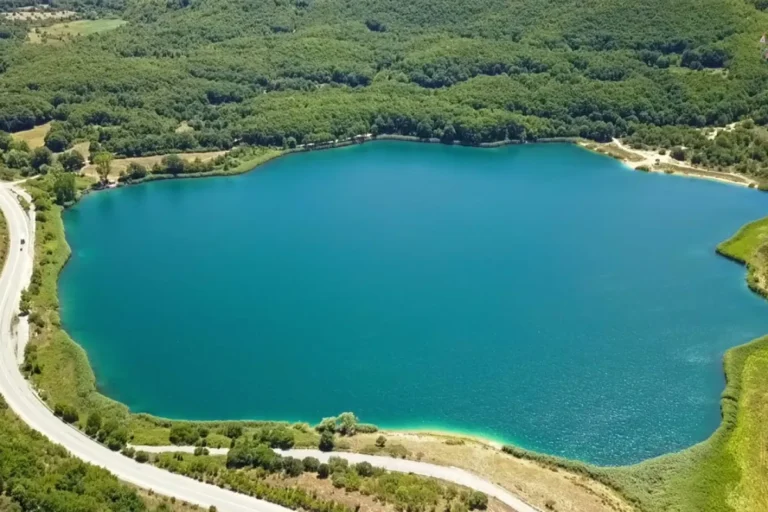
- Zaravina Lake
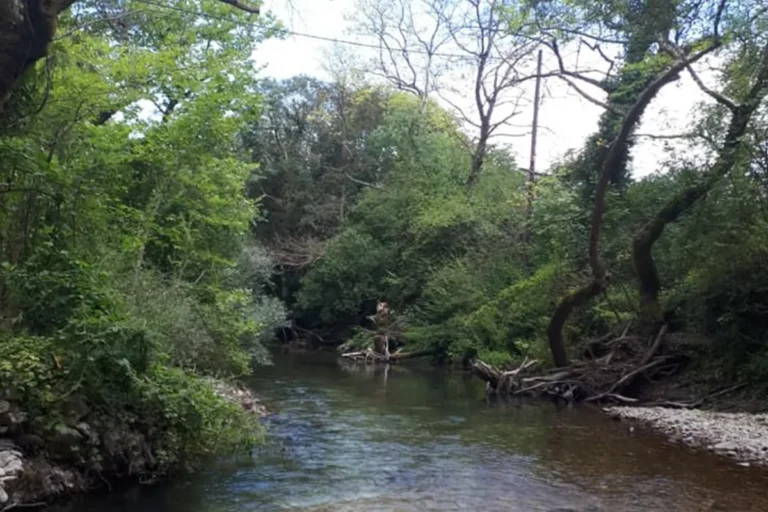
- Gormos Valley
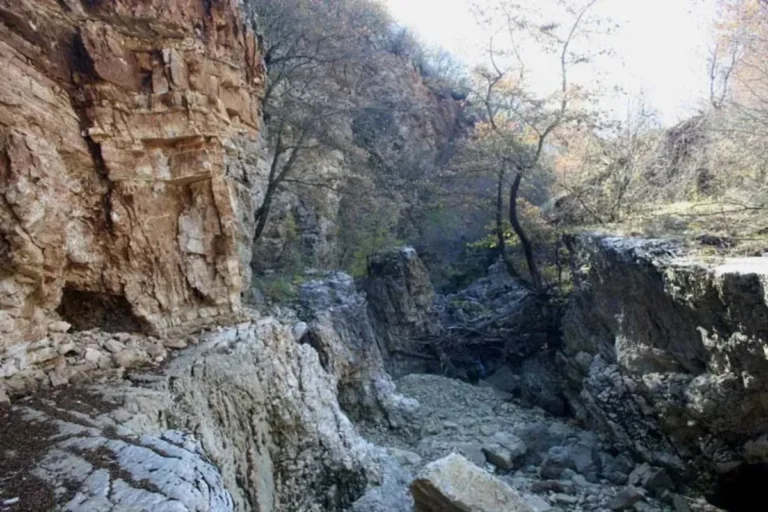
- Kouvaras Gorge
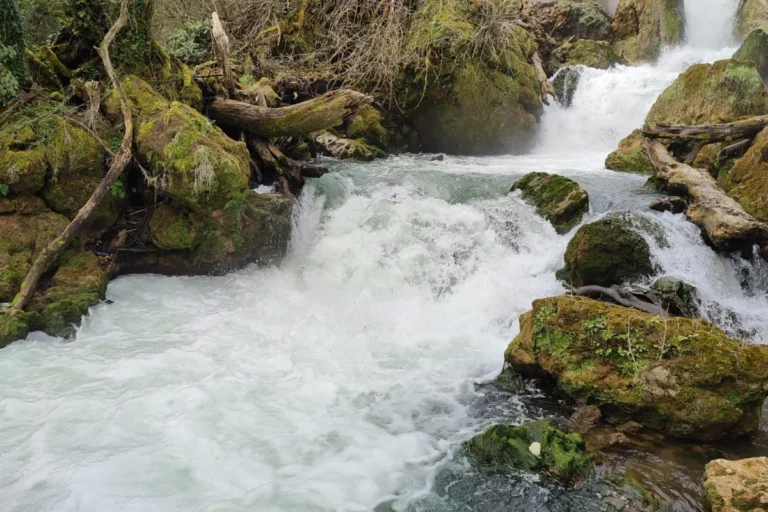
- Glyziani Waterfall
- Kouvaras Bridge
- Nonoulos Bridge
Η Λίμνη Ζαραβίνα αποτελεί τον πιο αναγνωρίσιμο φυσικό προορισμό του Πωγωνίου και ένα από τα πιο ιδιαίτερα υδάτινα τοπία της Ηπείρου. Βρίσκεται κοντά στο χωριό Ζαραβίνα, πάνω στον άξονα Ιωαννίνων–Κακαβιάς, και ξεχωρίζει τόσο για τη φυσική της ομορφιά όσο και για τη γεωμορφολογική της ιδιαιτερότητα. Πρόκειται για ανοιχτού τύπου καρστική λίμνη, με σχεδόν κυκλικό σχήμα, περίμετρο περίπου 2,2 χιλιομέτρων, έκταση περίπου 285 στρεμμάτων και μέγιστο βάθος που φτάνει περίπου τα 31,5 μέτρα, γεγονός που την κατατάσσει ανάμεσα στις βαθύτερες φυσικές λίμνες της χώρας.
Για τον επισκέπτη, η Ζαραβίνα προσφέρει μια εμπειρία ήρεμη αλλά ιδιαίτερα ατμοσφαιρική. Οι χαμηλοί λόφοι που την περιβάλλουν, η αίσθηση απομόνωσης και οι τοπικοί θρύλοι που συνοδεύουν το όνομά της ενισχύουν τον μυστηριακό χαρακτήρα του τοπίου.
Κοιλάδα του Γορμού
Η κοιλάδα του Γορμού αποτελεί μία από τις πιο χαρακτηριστικές φυσικές ενότητες του Πωγωνίου και αποτυπώνει με καθαρό τρόπο τον ήπιο αλλά αυθεντικό χαρακτήρα της περιοχής. Ο ποταμός Γορμός πηγάζει από την ευρύτερη ζώνη του Ωραιοκάστρου, διασχίζει το βόρειο τμήμα του Πωγωνίου και κυλά προς τον Καλαμά, κοντά στη Λίμνη Ζαραβίνα. Στην πορεία του συνδέεται με χωριά και τοπία όπως ο Άγιος Κοσμάς, το Ωραιόκαστρο, ο Παρακάλαμος και η ευρύτερη δασική ενότητα της περιοχής, δημιουργώντας ένα τοπίο με πλατάνια, μικρές χαράδρες, πηγές και ρέματα.
Η κοιλάδα του Γορμού δεν εντυπωσιάζει με τον θεατρικό τρόπο ενός μεγάλου φαραγγιού, αλλά με τη σταθερή, ήρεμη δύναμη ενός τοπίου που παραμένει ζωντανό και αυθεντικό. Είναι μια ενότητα ιδανική για ήπια φυσιολατρική περιήγηση, για εξερεύνηση του αγροτικού και υδάτινου στοιχείου του Πωγωνίου και για γνωριμία με μια πιο πράσινη, λιγότερο προβεβλημένη όψη της Ηπείρου.
Χαράδρα του Κούβαρα
Η χαράδρα του Κούβαρα είναι ένα από τα πιο ενδιαφέροντα φυσικά τοπία του Πωγωνίου και συνδέεται άμεσα με την περιοχή ανάμεσα στο Δολό και την Πωγωνιανή. Το Δολό, χτισμένο σε υψόμετρο περίπου 800 μέτρων στο όρος Κουτσόκρανο, βρίσκεται δίπλα στη χαράδρα, η οποία αναφέρεται επίσημα ως περιοχή ιδιαίτερου φυσικού κάλλους και ως προορισμός που ενδείκνυται για περιπατητικό τουρισμό. Παράλληλα, μέσα στη χαράδρα βρίσκεται και το Γεφύρι του Κουβαρά, από όπου περνά το μονοπάτι που συνδέει τα δύο χωριά, ενισχύοντας ακόμη περισσότερο τη σχέση του τοπίου με την παραδοσιακή κίνηση και τη μνήμη της περιοχής.
Η χαράδρα του Κούβαρα συνδυάζει με ιδιαίτερα ισορροπημένο τρόπο τη φυσική ομορφιά με το παραδοσιακό ηπειρώτικο τοπίο. Δεν πρόκειται μόνο για ένα σημείο με φυσικό ενδιαφέρον, αλλά για έναν χώρο όπου η πέτρα, το μονοπάτι, το γεφύρι και η χαράδρα λειτουργούν ως ενιαίο σύνολο.
Ο καταρράκτης που συνδέεται με την παλαιά ονομασία Γλύζιανη αφορά την περιοχή του σημερινού χωριού Καταρράκτης στο Πωγώνι, κοντά στον ποταμό Καλαμά. Σύμφωνα με τις τοπικές και δημοτικές αναφορές, το χωριό πήρε το όνομά του από τον μεγάλο φυσικό καταρράκτη που σχημάτιζαν τα νερά του ποταμού, ένα τοπίο που εντυπωσίαζε παλαιότερους περιηγητές και ιστορικούς.
Ο αρχικός μεγάλος καταρράκτης καταστράφηκε ύστερα από έντονα πλημμυρικά φαινόμενα στα τέλη του 19ου αιώνα, όμως η τοποθεσία διατηρεί έως σήμερα τη φυσική και ιστορική της σημασία, ενώ η παλαιά ονομασία Γλύζιανη συνδέεται άμεσα με αυτή την υδάτινη φυσιογνωμία του τόπου.
Το Γεφύρι του Κουβαρά, στην περιοχή της Πωγωνιανής, αποτελεί ένα από τα πιο ενδιαφέροντα και λιγότερο προβεβλημένα πέτρινα γεφύρια της Ηπείρου. Βρίσκεται μέσα στη χαράδρα του Κουβαρά, σε ένα τοπίο που αποπνέει ηρεμία, απομόνωση και έντονη αυθεντικότητα, και συνδέεται με το παλιό μονοπάτι που ένωνε την Πωγωνιανή με το Δολό. Παρότι δεν ανήκει στα γεφύρια που έχουν αποκτήσει πανελλήνια φήμη, διαθέτει μια ξεχωριστή γοητεία που πηγάζει ακριβώς από αυτή τη διακριτική του παρουσία.
Είναι ένα μνημείο που φέρει μέσα του τον μόχθο, την ανάγκη και τη συλλογική μνήμη των ανθρώπων της παραμεθόριας Ηπείρου. Για τον επισκέπτη που θέλει να δει μια πιο ήσυχη και βαθιά πλευρά του τόπου, το γεφύρι αυτό προσφέρει μια εμπειρία λιγότερο τουριστική και περισσότερο ουσιαστική.
Το Γεφύρι Νονούλως κουβαλά μια από τις πιο ανθρώπινες και συγκινητικές ιστορίες της περιοχής του Πωγωνίου. Πέρα από την αρχιτεκτονική του αξία, είναι γνωστό και για την παράδοση που το συνοδεύει, γεγονός που του προσδίδει έναν ιδιαίτερο συναισθηματικό χαρακτήρα. Βρίσκεται κοντά στον παλιό νερόμυλο, στην αρχή της χαράδρας, και αποτελεί κομμάτι μιας ευρύτερης πολιτιστικής και φυσικής διαδρομής που αποκαλύπτει στον επισκέπτη μια άλλη, πιο σιωπηλή όψη της Ηπείρου.
Το γεφύρι αυτό δεν εντυπωσιάζει με μεγαλοπρέπεια αλλά με τη δύναμη της αφήγησης και της τοπικής μνήμης. Στέκει σαν ένα μικρό, πολύτιμο τεκμήριο του τρόπου με τον οποίο οι κοινότητες του τόπου έχτιζαν όχι μόνο περάσματα, αλλά και δεσμούς με τον χρόνο και τον τόπο τους.
See more
- Privacy Policy
- Cookies