The History of Tzoumerka

Tzoumerka is one of the most authentic mountainous regions of Epirus and the southern Pindus, with a history closely linked to its geomorphology, isolation, livestock farming, local craftsmanship, and the residents’ participation in major historical struggles. The region itself is described by official sources as a place steeped in history, with a strong presence during the Revolution of 1821, as well as in the events of World War II and the Civil War. Mountain passes, rivers, ravines, and stone villages have shaped a world where daily life was built on resilience, community cohesion, and a strong connection to the landscape.

The historical identity of Tzoumerka is also reflected in its settlements themselves. Villages such as Syrrako and Kalarrites experienced a period of great prosperity, particularly in the 18th and 19th centuries, thanks to commercial activities, livestock farming, and specialized crafts such as silversmithing. In Syrrako, the village’s former economic prosperity was linked to merchants, tailors, and livestock farmers who distinguished themselves in the Mediterranean markets, while the village’s architectural character still clearly preserves this past. Thus, Tzoumerka is not merely a natural destination; it is a place where the mountains and history coexist in a constant dialogue.

The Benefactors of Tzoumerka

Unlike regions such as Metsovo, Tzoumerka is not typically portrayed through a single, very specific “canon” of national benefactors. However, the region is strongly associated with communities that developed commercial, technical, and social power and left a significant mark on their homeland. Syrrako, for example, is associated with prominent figures such as Ioannis Kolettis, who was a member of the Philiki Etaireia and Prime Minister of Greece, as well as the poet Kostas Krystallis, while the village’s broader prosperity is attributed to merchants, livestock farmers, and artisans who brought honor to their homeland both within and outside Greece.

For Tzoumerka, the concept of contribution is expressed more through the local prosperity of the communities and through the tradition of artisans and creators than through a short list of major national donors. Silverwork flourished in Kalarrites and Syrrako, while the master craftsmen of Tzoumerka, from villages such as Pramanta, Melissourgoi, Ktistades, Raftaioi, and Michalitsi, created works of great value throughout Greece and the Balkans

Local Products of Tzoumerka

The culinary identity of Tzoumerka is closely linked to livestock farming, the mountainous environment, and the traditional way of life in the villages. The official culinary promotion of Epirus links the Athamanika Mountains region with cheese-making and the production of characteristic Epirus cheeses, such as feta, kefalograviera, and galotyri, as well as dairy products such as anthotyro and tsalafouti. At the same time, in the villages of Tzoumerka, one can find local meats, Epirus-style pies, traditional recipes, and spirits—elements that reflect the simple yet exceptionally flavorful essence of mountainous Epirus cuisine.

The local market and small-scale producers in the region still offer products such as traditional tsipouro, sweets, pastries, and small-batch items tied to the village and the seasons. Official tourism materials for Northern Tzoumerka clearly mention traditional tsipouro, local wines, fine meats, and regional recipes, while the broader Epirus cuisine places special emphasis on rural products and high-quality ingredients.

Churches and Monasteries in Tzoumerka

The religious heritage of the Tzoumerka region is one of the most significant aspects of its cultural identity. Official sources for the region note that there are significant churches and monasteries here, many of which are linked to the era of the Despotate of Epirus or to the post-Byzantine periods of the region’s history. The mountainous landscape of Tzoumerka, with its cliffs, gorges, and rugged slopes, has lent the religious monuments a unique sense of drama: many are built in striking locations, almost suspended above rivers and rocks.

Among the most important monasteries, the Monastery of Kipina, near Kalarrites, stands out; it is built almost in the middle of a massive rock above the gorge of the Kalarritikos River. The Tsoukas Monastery, near Elliniko, also holds a special place, with a tradition of having been founded in the late 12th century and renovated in the 18th century. Other significant religious monuments in the area include the Vyliza Monastery between Kalarrites and Matsouki, the Mouhoustiou Plakas Monastery, and the Agia Paraskevi Pramanta Monastery, just outside Pramanta. All these monuments form a unity of faith, art, and historical memory that deserves a place of its own in any serious tribute to Tzoumerka.

Museums and Cultural Attractions

Tzoumerka is not just about nature and outdoor activities; it also boasts significant cultural sites that shed light on different aspects of local life. In Northern Tzoumerka, in Elliniko, lies the Theodoros Papagiannis Museum of Contemporary Art, dedicated to the renowned sculptor and his works, many of which utilize recycled materials and references to Epirus, its history, and human memory. This museum lends the region a strong contemporary cultural dimension and serves as a meeting point between art and landscape.

Meanwhile, in Central Tzoumerka, official sources mention the existence of Folklore Museums in Kypseli and Agnanta, which enhance the cultural image of the region and help visitors gain a deeper understanding of daily life, tools, customs, and local practices of the past. There is also a Folklore Museum in Syrrako, while the village itself, with its mansions, busts, library, and cohesive layout, is a cultural destination in its own right. Thus, Tzoumerka offers a cultural backdrop far richer than what visitors typically expect from a purely mountainous destination.

Architecture and Cultural Identity

One of the most distinctive features of Tzoumerka is its architectural coherence and its close connection to the art of stonework. Traditional settlements such as Syrrako, Kalarrites, Pramanta, Vourgareli, and other villages in the region reveal a settlement logic deeply adapted to the mountain terrain. Stone houses, slate roofs, cobblestone streets, stone bridges, and churches blend organically into the landscape, creating a world that seems to emerge from the hillside itself.

The tradition of master craftsmanship in Tzoumerka further reinforces this identity. The region’s artisans, particularly during the Ottoman period and for centuries thereafter, traveled in groups and created churches, bridges, fountains, and buildings of great aesthetic value. At the same time, silversmithing in Kalarrites and Syrrako complements the region’s cultural profile, adding a tradition of intricate craftsmanship to an otherwise rugged and imposing landscape.

Sights of Tzoumerka

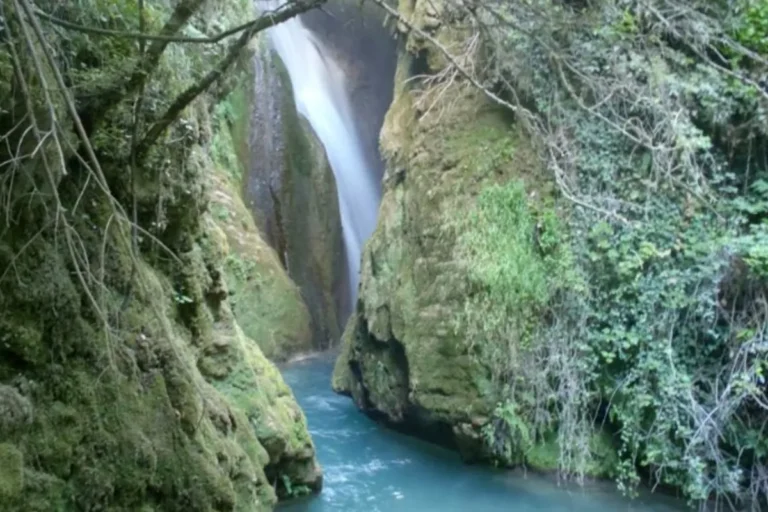
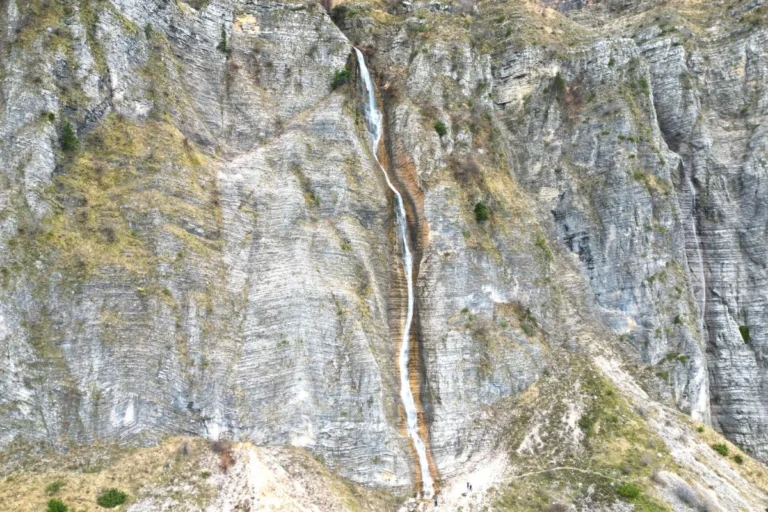
Ο Καταρράκτης Κεφαλόβρυσου είναι ένα από τα πιο χαρακτηριστικά φυσικά αξιοθέατα των Τζουμέρκων και συνδέεται άμεσα με την περιοχή των Πραμάντων. Η πρόσβαση γίνεται μέσα από πεζοπορική διαδρομή, γεγονός που δίνει στην εμπειρία έναν ήπιο εξερευνητικό χαρακτήρα και επιτρέπει στον επισκέπτη να γνωρίσει σταδιακά το φυσικό περιβάλλον της περιοχής.

Ο συνδυασμός νερού, βλάστησης και ορεινού ανάγλυφου δημιουργεί ένα τοπίο που αποτυπώνει πολύ καθαρά την αυθεντική φύση των Τζουμέρκων: ζωντανή, δροσερή και έντονα συνδεδεμένη με το βουνό.

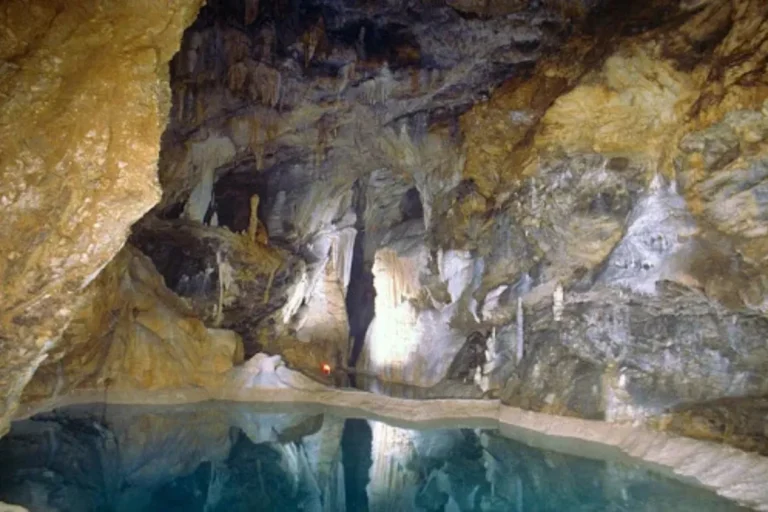
Το Σπήλαιο Ανεμότρυπα βρίσκεται κοντά στα Πράμαντα και αποτελεί ένα από τα πιο ιδιαίτερα φυσικά αξιοθέατα των Βορείων Τζουμέρκων. Ξεχωρίζει όχι μόνο για τον γεωλογικό του χαρακτήρα αλλά και για το γεγονός ότι στο εσωτερικό του υπάρχουν τρεις μικρές λίμνες, μαζί με πολύχρωμους σταλαγμίτες και ένα εντυπωσιακό υπόγειο περιβάλλον. Η παρουσία του σπηλαίου εμπλουτίζει σημαντικά την εικόνα της περιοχής, καθώς προσθέτει μια διαφορετική διάσταση στη φυσική εμπειρία των Τζουμέρκων, πέρα από τα βουνά, τα ποτάμια και τα φαράγγια.

Για τον επισκέπτη, η Ανεμότρυπα αποτελεί μια ξεχωριστή στάση που συνδυάζει φυσικό ενδιαφέρον, αισθητική εντύπωση και μια αίσθηση ανακάλυψης.

Φαράγγια Αράχθου και Καλαρρύτικου

Τα φαράγγια του Αράχθου και του Καλαρρύτικου αποτελούν δύο από τα σημαντικότερα φυσικά στοιχεία των Τζουμέρκων και συνδέονται με την ευρύτερη περιοχή των Πραμάντων και των γύρω ορεινών οικισμών. Το τοπίο εδώ είναι έντονο, με γκρεμούς, ποτάμια περάσματα και δυναμική γεωμορφολογία, στοιχεία που ενισχύουν τον περιπετειώδη χαρακτήρα της περιοχής.  

Παράλληλα, η παρουσία αυτών των φαραγγιών έχει συμβάλει στην ανάπτυξη δραστηριοτήτων όπως rafting, canyoning, kayaking και άλλες υπαίθριες εμπειρίες που δίνουν στα Τζουμέρκα ιδιαίτερη θέση ανάμεσα στους ορεινούς προορισμούς της Ελλάδας.

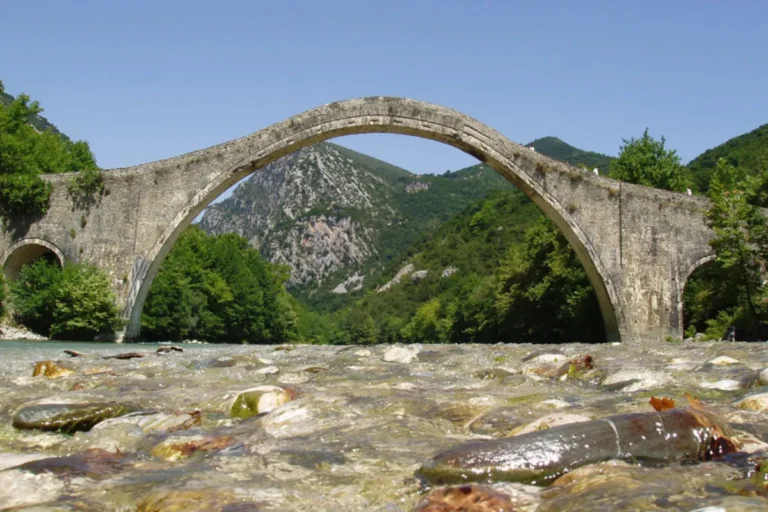
Το Γεφύρι της Πλάκας αποτελεί ένα από τα σημαντικότερα μνημεία της ηπειρώτικης αρχιτεκτονικής και ένα από τα πιο αναγνωρίσιμα τοπόσημα των Τζουμέρκων. Χτισμένο πάνω από τον Άραχθο, λειτούργησε για πολλά χρόνια ως βασικό πέρασμα που συνέδεε ολόκληρες περιοχές της Ηπείρου, ενώ η επιβλητική μονότοξη κατασκευή του το έχει κατατάξει ανάμεσα στα πιο εντυπωσιακά πέτρινα γεφύρια των Βαλκανίων.

Σήμερα, δεν είναι απλώς ένα τεχνικό έργο του παρελθόντος, αλλά ένα ζωντανό σύμβολο της ιστορίας, της αντοχής και της σχέσης του ανθρώπου με το άγριο φυσικό τοπίο των Τζουμέρκων. Η παρουσία του μέσα στο φαράγγι, σε συνδυασμό με τη δύναμη του ποταμού και τη δραματικότητα του τοπίου, δημιουργεί μια εμπειρία που μένει βαθιά χαραγμένη στη μνήμη κάθε επισκέπτη.

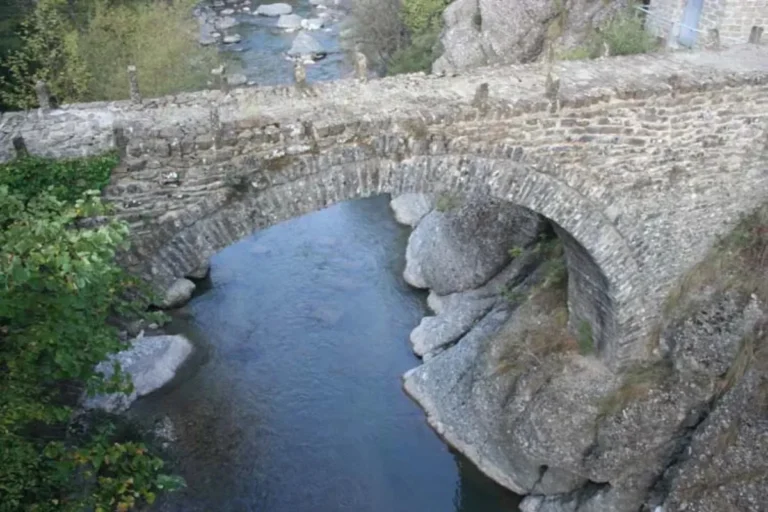
Το Γεφύρι του Συγκούνα είναι ένα από τα όμορφα παραδοσιακά γεφύρια των Τζουμέρκων και συνδέεται άμεσα με τη ζωή και τις μετακινήσεις των ανθρώπων της περιοχής σε παλαιότερες εποχές. Χτισμένο σε ένα τοπίο αυθεντικό και αυστηρά ηπειρώτικο, αναδεικνύει τη λιτή σοφία της πέτρας και τη δεξιοτεχνία των μαστόρων που ήξεραν να ενσωματώνουν τα έργα τους στο φυσικό περιβάλλον χωρίς υπερβολές.

 Δεν εντυπωσιάζει με την κλίμακα του όσο με τον χαρακτήρα του μοιάζει να είναι οργανικό κομμάτι της γης που το περιβάλλει. Για τον επισκέπτη, το γεφύρι αυτό προσφέρει μια πιο ήσυχη και αυθεντική επαφή με τα Τζουμέρκα, μακριά από την ένταση των πιο γνωστών αξιοθέατων αλλά εξίσου ουσιαστική

See more

Nach oben scrollen