The History of Konitsa
Konitsa is one of the most significant mountainous regions of Epirus, with a history closely tied to the Pindus mountain passes, its border location, and its connection to trade, livestock farming, and population movements. The region developed in an area where mountains, rivers, and mountain passes shaped not only its geography but also its economic and social trajectory. Its current profile was shaped by the coexistence of diverse communities, the artisanal traditions of its villages, and continuous interaction with the northern Pindus Mountains and the Balkans.
Konitsa was liberated in February 1913, and following the population exchange of 1925, many Muslim families left the area, and refugees from Cappadocia settled in their place. These historical changes left a strong imprint on the character of the town and the wider region, which to this day retains elements from different historical phases, from the Byzantine and post-Byzantine periods to Ottoman and modern Greek history. Konitsa is a place where history is not confined to archives but is visibly imprinted on the settlement, the bridges, the monasteries, and the old buildings.
The Benefactors of Konitsa
Konitsa is not typically associated with the same “classic” list of national benefactors found in other regions of Epirus, yet its historical identity is also closely tied to the concepts of generosity and community support. The Municipality of Konitsa itself maintains an archive and a public record-keeping process for the municipality’s benefactors and donors, recognizing that many communities in the region relied on donations, bequests, and initiatives by people who supported their local area through public-benefit projects.
The communities of the Mastorochoria, such as Pyrsogianni and Vourbiani, also hold a special place in the region’s history; their residents traveled in groups throughout Greece and beyond its borders, bringing expertise, wealth, and prestige back to their homeland. Through this journey, Konitsa became connected not only to donors in the narrow sense, but also to a broader tradition of creativity, social contribution, and support for local life.
Local Products of Konitsa
Konitsa’s culinary identity is shaped by the region’s mountainous terrain, livestock farming, small-scale agriculture, and the long-standing connection between the locals and the land and mountains. In the wider region, one can find traditional products such as tsipouro, wine, trahana, spoon sweets, and other goods produced at home or by cooperatives, all of which are linked to the villages and communities of the area.
For example, in Molyvdoskepasti, the local cooperative produces exactly such products, clearly demonstrating how local production remains a vital part of daily life and the region’s identity.
At the same time, Konitsa is also renowned for certain agricultural products that are more closely associated with the local market and the collective memory of Epirus, such as the Konitsa melon, which has been documented in the municipality’s development documents as a traditional product of the region with particular recognition. Together with the cheeses, meats, pies, and flavors of Epirus cuisine, all of these elements come together to form an authentic culinary experience deeply rooted in the local landscape

Churches and Monasteries in Konitsa
The Konitsa region boasts a rich religious heritage, with monuments dating back to the Byzantine and post-Byzantine periods and a strong presence of monasteries and churches throughout the area. The municipality itself notes that Konitsa is home to numerous religious monuments, many of which are outstanding examples of the artistry of the region’s master stonemasons. This religious tradition is not merely a supplementary element of the region, but a fundamental part of its cultural and historical identity.
Among the most significant religious sites is the Monastery of Molyvdoskepasti, which the Municipality dates to the 7th century AD and which retains a strong fortress-like character, a Byzantine katholikon, and remarkable frescoes dating from the 13th to the 18th century. The historic Monastery of Panagia Stomou, built in the Aoos Gorge, also holds a special place; it was here that Elder Paisios lived as a monk, a connection that has lent the area particular spiritual significance. Also noteworthy are the monasteries of Zerma, Molista, Kavasila, and Panagia Kladormi, while within the town of Konitsa, the Holy Church of Saint Kosmas of Aetolia and the Chapel of the New Martyr George are noteworthy.
Museums and Cultural Attractions
Konitsa offers cultural attractions that help visitors discover the region beyond its natural beauty. In the town itself, the Konitsa Cultural Center and the photography exhibition housed in the old Muslim school near the Suleiman Mosque offer a first glimpse into the history and monuments of the area. At the same time, the presence of old mansions and buildings, such as the Klearchos Papadiamantis House, enriches the route through the city and reveals an architectural continuity that connects different eras of its history.
In the wider area, the Ethnological Museum of Epirus Master Craftsmen in Pyrsogianni is of particular importance; housed in the village’s old school, which highlights the history of the renowned Epirus stone masons and adds valuable cultural depth to the tribute to Konitsa. Equally distinctive is the Natural History Museum in Bourazani, which connects the region with its natural environment and biodiversity. All of this demonstrates that Konitsa is not merely a destination of mountains and rivers, but also a place with a substantial cultural identity, where nature, history, and memory coexist in harmony.
Architecture and Cultural Identity
One of the most distinctive features of Konitsa is its close connection to the tradition of stone masonry. The villages of the region, and especially the well-known “Mastorochoria” (stonemason villages), were home to renowned craftsmen who built bridges, houses, schools, churches, and public buildings of great aesthetic and technical value.
The architecture of Konitsa and the surrounding villages is not merely beautiful; it is a bearer of history, technical knowledge, and local pride. In Pano Konitsa and in villages such as Ganadio, which have been designated traditional settlements, as well as in the craftsmen’s villages of the region, visitors encounter a sense of unity that seems organically intertwined with the mountain. It is precisely this sense of cohesion that gives Konitsa an authentic and multifaceted character.
Sights of Konitsa
- Aos River
- Aoos Gorge
- Konitsa Bridge
- Kleidonia Bridge
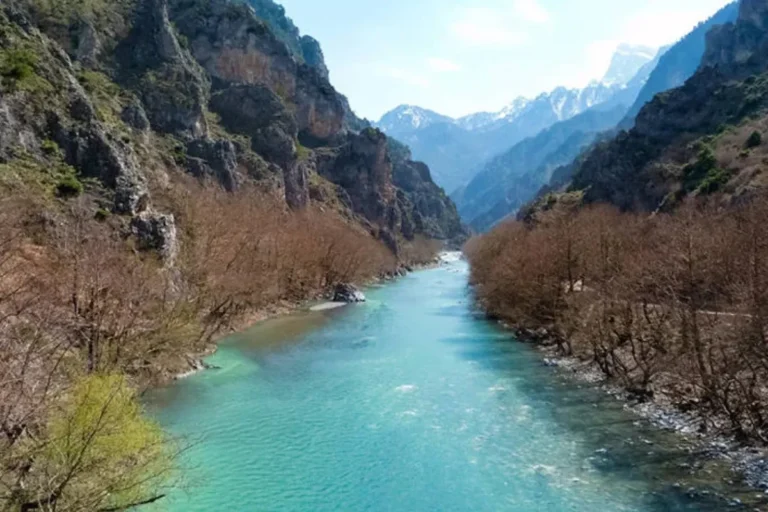
Aoos River
The Aoos is one of the most important rivers in Epirus and a key element of Konitsa’s natural identity. Its source lies in the Pindus Mountains, and its course winds through spectacular mountain landscapes, gorges, and areas of exceptional environmental value. The fact that it is one of the few free-flowing rivers in Europe lends even greater significance to its ecological footprint, while its connection to Konitsa makes it one of the main reasons why the region holds such strong appeal for nature lovers and outdoor travelers.
For visitors, the Aoos is not merely a geographical feature but a hub of experiences. The surrounding area is ideal for activities such as rafting and kayaking, as well as for more gentle encounters with nature, through sightseeing, walks, and exploring the mountainous landscape of northern Epirus.
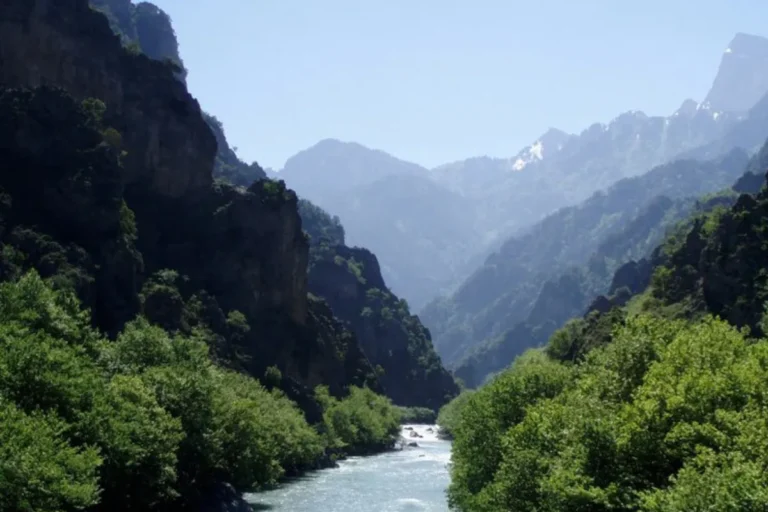
The Aoos Gorge is one of the most significant natural landscapes in the Konitsa region and underscores the majestic character of the northern Pindus Mountains. Its connection to the Aoos River, the surrounding mountains, and the broader natural landscape of Konitsa creates a landscape of great intensity and aesthetic value, ideal for those seeking the most dramatic side of Epirus’s nature. The area has also developed as a hub for outdoor activities, further reinforcing its identity as a destination for exploration and adventure.
The Aoos Gorge deserves to be presented as a distinct natural asset of Konitsa and not merely as an extension of the river. It is a destination for those who wish to experience a more rugged, mountainous, and unspoiled version of Epirus, where the landscape takes on a grander scale and visitors feel they are truly in the heart of the Pindus Mountains.
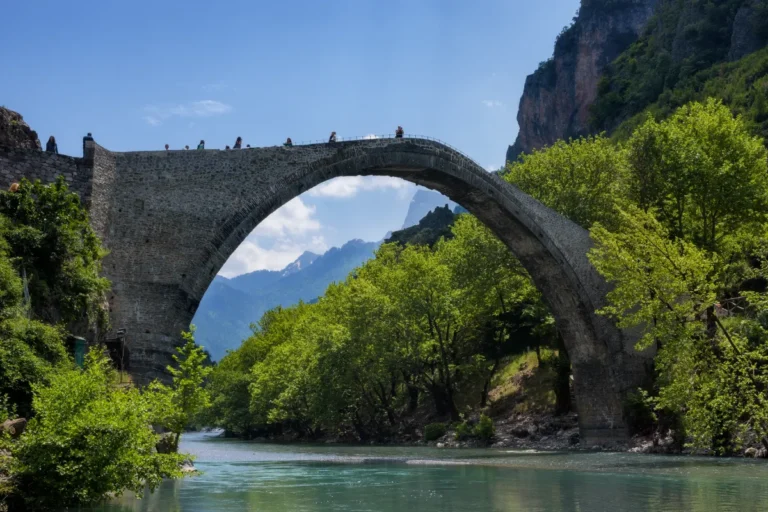
The Konitsa Bridge is one of the most impressive and imposing stone bridges in Epirus, towering over the Aoos River in an almost monumental fashion. Built in the 19th century at a point where the natural landscape takes on a particularly dramatic character, it served as a key crossing point for the region and remains one of Konitsa’s most important attractions today. The view of the bridge, set against the backdrop of the mountainous terrain and the entrance to the Vikos–Aoos National Park, offers visitors one of the most authentic experiences of Epirus’s natural beauty. It is not only its architecture that impresses, but also the feeling that you are standing in a place where time moves more slowly and history remains present in every stone.
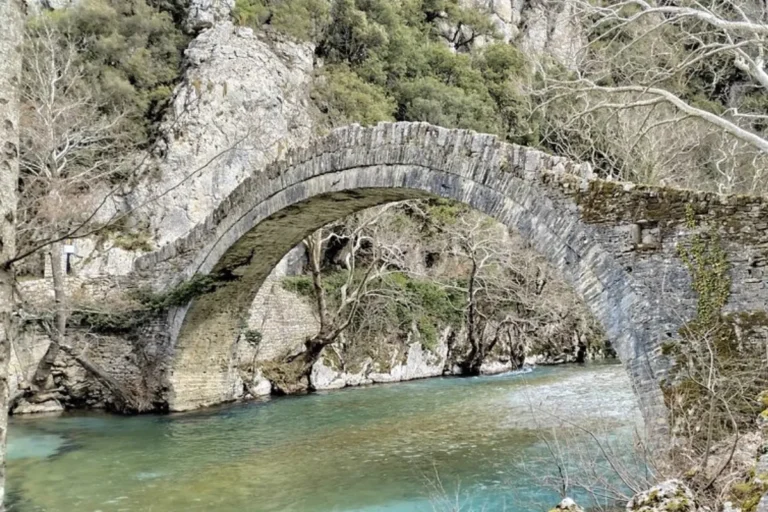
The Kleidonia Bridge is closely linked to Voidomatis and to one of the most unique natural experiences one can have in Epirus. Its location, amidst an environment of rare purity and striking natural beauty, makes it more than just a crossing: it is a meeting point of traditional architecture and the vibrant energy of the river. The area around the bridge attracts visitors who love nature, activity, and authenticity, while the bridge itself adds a sense of historical continuity to a landscape that remains vibrant and dynamic. It is one of those places where Epirus naturally demonstrates how harmoniously human endeavor can coexist with the power of the landscape.
See more
- Privacy Policy
- Cookies