The History of Dodona

Dodona is a place where myth and history come together in a unique way. Here, Dodonaean Zeus was worshipped—one of the oldest forms of the god in the Greek world—and here the oldest oracle in Greece developed, closely tied to nature, the sacred tree, and the voice of the land. Tradition links Dodona to the pre-Hellenic Pelasgians, who are considered among the first inhabitants of the region and the earliest practitioners of the cult of Zeus. Ancient writers such as Homer, Strabo, and Dionysius of Halicarnassus mention Dodona, attesting to its great antiquity and significance. In the Homeric tradition, even Achilles invokes Zeus of Dodona, demonstrating how powerful the sanctuary’s reputation already was in Homeric times.

Over the centuries, Dodona became a focal point for the mainland tribes, particularly the Molossians, who linked their political and historical trajectory to the site. During the Hellenistic period, under Pyrrhus, the region experienced a period of great prosperity.The great king of Epirus strengthened the power of the Epirus state and helped establish Dodona as a major religious and political center, leaving a lasting mark on its history. Today, Dodona is not only a major archaeological site but also a place where the memory of ancient Epirus remains alive. Amid the ruins, the landscape, and the silence of the earth, visitors can still sense something of the timeless presence of Dodonian Zeus. “ O Zeus of Dodona, ruler of the Pelasgians, you see Dodona, the snow-capped city, far away, and around it lie the villages of the Selli, your mud-footed, straw-clad seers. “

The Benefactors of Dodona

Dodona region is associated with the Epirus tradition of philanthropy, which is reflected in support for schools, churches, and public works. In several villages in the region, there are records of individuals who substantially supported the local community by donating property or financial aid for the area’s progress.

A prime example is Meliggi, where the brothers Vasilios and Nikolaos Petrou, Panagiotis Athanasiou-Giannoplatis, and Paraskevi Rizou-Tsoli are mentioned. Their contributions were linked to education, the church, and community support. The presence of such benefactors is an important part of local history and highlights the strong connection residents have with their homeland.

Local Products of Dodona

The Dodona region is renowned for its authentic products from the Epirus countryside, with beekeeping holding a special place. The region’s natural environment, with its aromatic herbs, oak trees, arbutus trees, and rich flora, is ideal for producing high-quality honey with distinctive characteristics.

Among the best-known local products are blossom honey, thyme honey, oak honey, and arbutus honey. These flavors are directly linked to the landscape and the region’s traditional production methods, offering visitors an authentic introduction to the culinary identity of Dodoni.

Churches and Monasteries in Dodona

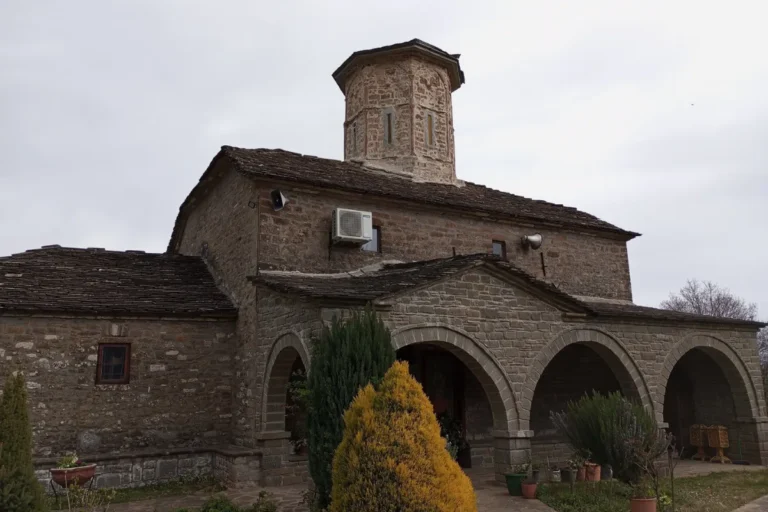
The churches in the Dodona area are important religious and historical landmarks, closely tied to the life of the local communities. Notable among them is Agia Paraskevi in Manteio, an 18th-century church of particular historical significance for the region. Also significant is Panagia ton Dramesion, which dates back to the 17th century and preserves remarkable architectural and artistic elements.

In Meliggi, the Church of the Dormition of the Virgin Mary is linked to the ecclesiastical and social history of the village, while in the wider area, churches and monasteries still stand, bearing witness to the enduring presence of the Orthodox tradition. The churches of Dodona are living testaments to faith, art, and historical continuity.

Museums and Cultural Attractions

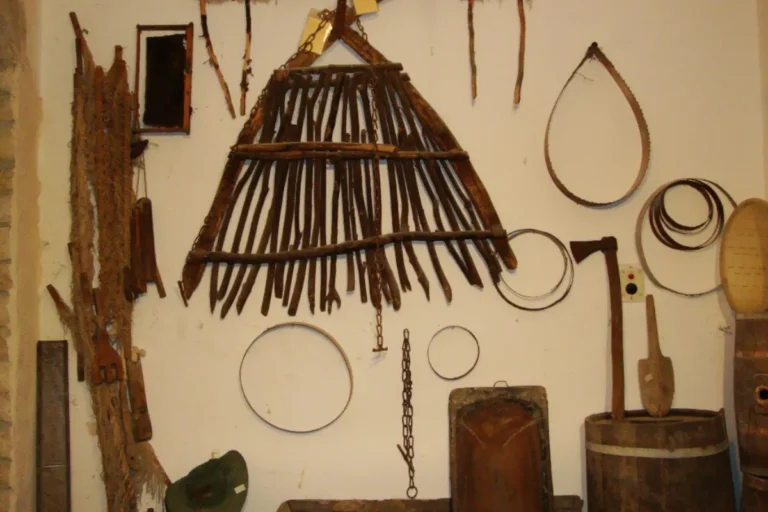
Dodona offers cultural attractions that truly enrich the visitor’s experience. In addition to the significant archaeological site, smaller museums that highlight local history and tradition are of particular interest. The Meliggi Folklore Museum “Petrou Brothers” houses objects of daily life, tools, and artifacts from the local community.

The Perdika Experiential Folklore Museum presents the traditional rural and pastoral life of the region, while the Museum of Ecclesiastical Art in Sklivani sheds light on the local religious heritage. At the same time, modern forms of presentation, such as the virtual reconstruction of the archaeological site, offer new ways to explore the history of Dodona.

Architecture and Cultural Identity

The architecture of Dodona is particularly interesting, as it combines ancient monumental heritage with the simple, traditional building style of Epirus. The archaeological site is dominated by the sanctuary of Dodonaeus Zeus, the ancient theater, the stadium, the bouleuterion, and other structures that form one of the most important religious and political centers of ancient Epirus.

At the same time, in the settlements of the region, one encounters stone-built churches, old schools, stone bridges, and traditional buildings that reflect the close relationship between local architecture and the natural environment. Stone dominates as the primary building material and gives the area an authentic, timeless character.

Sights of Dodona

The Church of Agia Paraskevi in Manteio is one of the most important religious and historical monuments in the Dodona region. The church was built in 1776 at the site known as “Tsioumpari,” nestled in a wooded area, and dominates the landscape thanks to its location atop a hill and its distinctive, soaring dome. Tradition links its construction to Saint Kosmas of Aetolia, while the site also gained special significance for the local community, as it housed the village’s first school.

In 1853, Agia Paraskevi was also linked to significant historical events, as residents of Manteio, Meligga, Dodoni, and Dramesi gathered at the church to mark the declaration of the Epirus-Thessaly Revolution. Today, the monument retains not only its religious significance but also the character of a place closely tied to the memory and history of the region

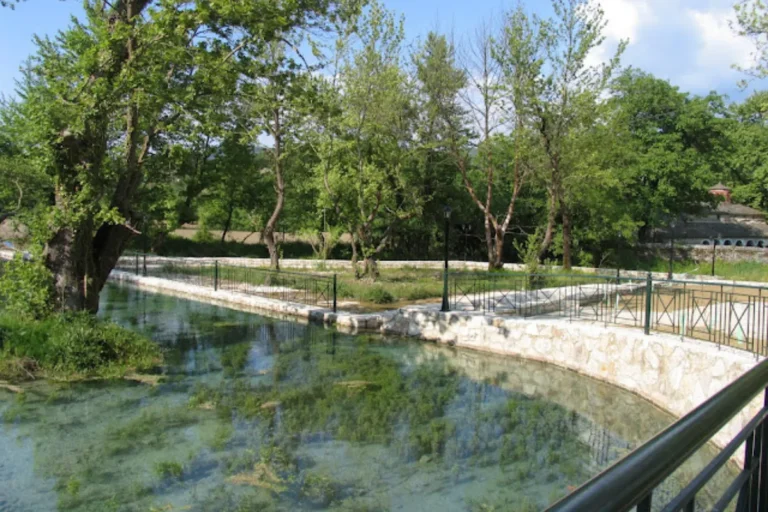
Sistrouni stands out for its natural landscape and its close connection to the region’s waterways. Among the sites within the Municipal Unit of Lakka-Souli, it is noted as one of the places where springs feed the Acheron River and its tributaries. The presence of water, combined with the stone bridges and old watermills, creates a particularly authentic landscape that strongly preserves the elements of the traditional Epirus countryside.

At the same time, the area features ruins of Pelasgian walls and ancient cist graves, elements that bear witness to the long history of settlement and the historical depth of the place. Sistrouni is thus a place where nature, local architecture, and traces of the past coexist in a meaningful and distinctive way

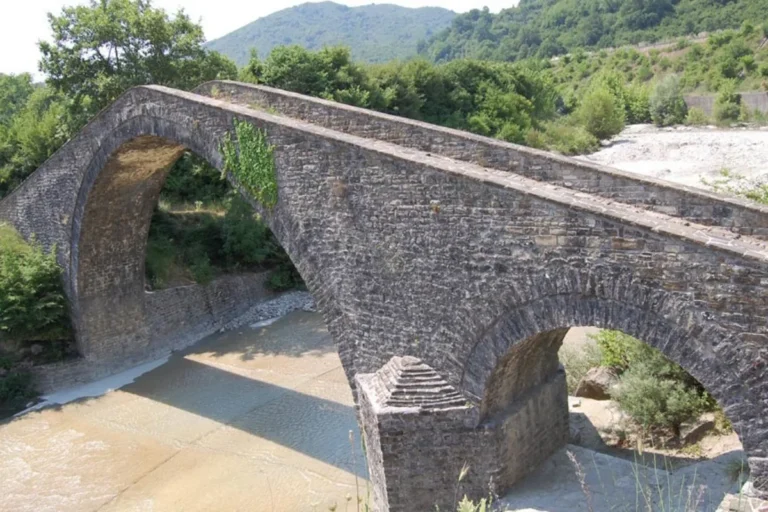
The Selloi region has retained its gentle rural and traditional character to this day, with settlements that remain closely tied to agriculture, livestock farming, and the natural landscape of Epirus. A prime example is Seniko, a semi-mountainous settlement at the northern end of the Selloi Valley, where the arched stone bridges at the village entrance create a scene in perfect harmony with the surroundings.

The stone bridge “Helimodi” also holds a special place; it is an important architectural monument of the region, a two-arched bridge with a total length of approximately forty meters and a stone-paved deck. The landscape is complemented by cultivated fields, low hills, and views toward Olytsika, creating an area where daily life, stone, and nature coexist authentically.

In Meliggoi, the “Petrou Brothers” Folklore Museum serves as an important repository of local history and the daily life of bygone eras. Efforts to establish it began in 1986, and the museum was founded in 1994, housed on the lower floors of the village’s old school, below the square and the Church of the Dormition of the Virgin Mary.

Its exhibits, all donated by residents, are organized into five rooms and showcase tools, household items, customs, and aspects of the area’s rural and social life. This site is also linked to the memory of the benefactor Panagiotis Athanasiou, or Giannoplatis, who settled in Romania, amassed a large fortune, and in his will of 1890 bequeathed it to the people of Melinga for charitable works. The Giannoplatis School was named after him, linking the museum to the history of education, philanthropy, and the collective identity of the village.

See more

Scroll to Top