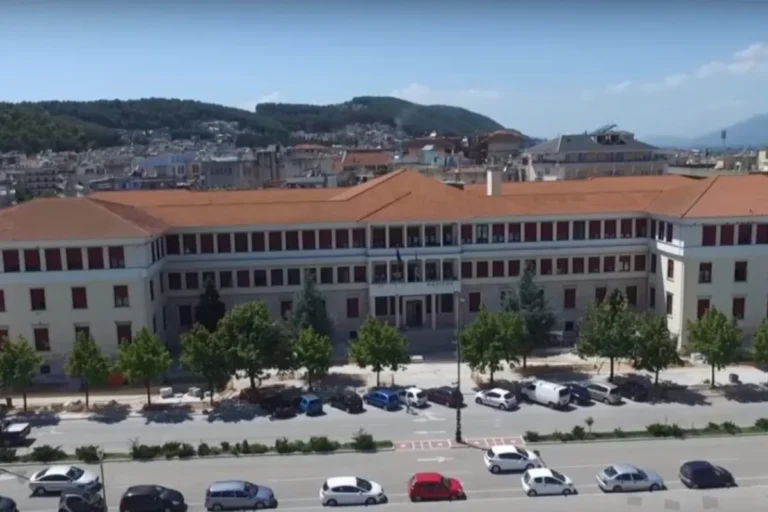
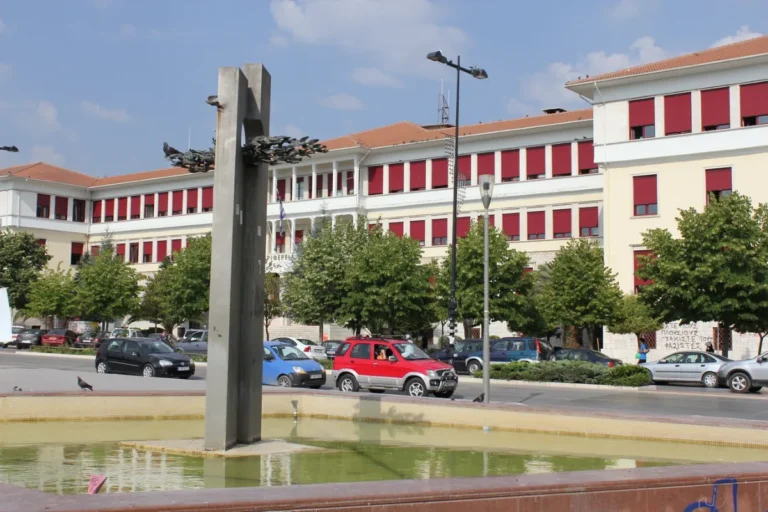
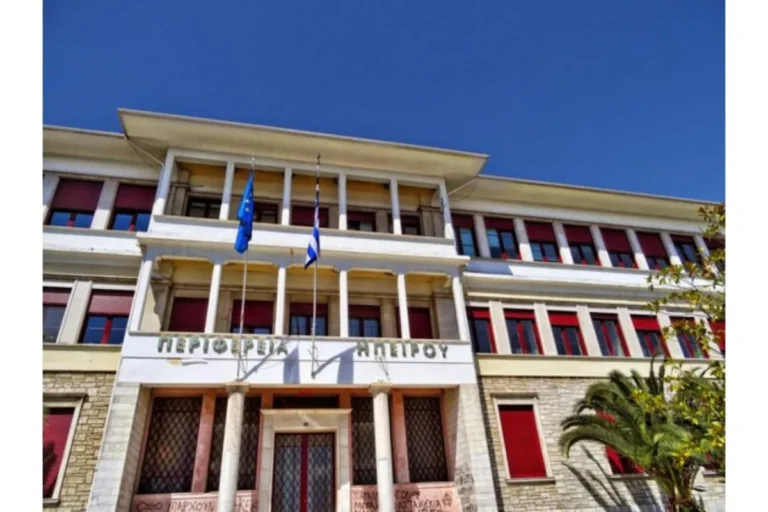
The building of the Region of Epirus, formerly known as the Ioannina Prefecture building, is one of the city’s most distinctive public buildings and a landmark of its modern administrative center. Construction began in 1935, based on plans by Ioannina-born architect Erika Ioannidou, and from its very conception, it was intended to be an imposing administrative building. However, construction was halted in 1940 when the building was bombed and remained in ruins for several years. Reconstruction began again in the 1960s, when the first two floors were completed, while in 1970 the third floor was added in the traditional Ioannina style, creating a striking yet interesting contrast with the austere neoclassical style of the original building.
The value of the site, however, is not limited to the current building. The site has a long historical continuity, as the wider area of today’s central square has been inhabited since the 15th century and was known as Namas Giah, meaning “place of prayer.” Over the following centuries, it evolved into an important hub of the city, and it was also home to Ioannina’s oldest Muslim cemetery. The Namas Giah Mosque, one of the city’s most important mosques, was erected on the same site, built on the site of the older church of Agia Paraskevi. The mosque stood until the early 20th century and was demolished in 1924 as part of the broader demolition of the city’s Ottoman mosques.
The area is also associated with significant infrastructure from the past, such as baths and aqueducts, a fact that confirms its central role in the historical development of Ioannina. Today, the building houses offices of the Region of Epirus and continues to hold key administrative significance. In front of its entrance stand two distinctive statues: those of Eleftherios Venizelos and Ioannis Kolettis, adding yet another layer of symbolic and historical significance to the site.
Το κτήριο της Περιφέρειας Ηπείρου δεν αποτελεί μόνο έναν χώρο διοίκησης, αλλά και ένα ζωντανό κομμάτι της ιστορίας της πόλης, όπου διαφορετικές εποχές, αρχιτεκτονικές αναφορές και μνήμες συνυπάρχουν στον ίδιο αστικό χώρο